
The first question should not be which funding source is cheapest
When a company prepares an investment, acquisition or new phase of growth, it is natural to look for the lowest-cost source of finance. That comparison matters, but it is rarely enough.
An apparently inexpensive facility may demand excessive security, impose repayments that do not match cash generation or limit future decisions. Equity does not require monthly repayments, but it involves sharing value, information and sometimes influence. An incentive may reduce the cost of investment, but it comes with rules, deadlines and implementation conditions.
The choice should begin with the company's need, not with the product currently available.
Understand what is being financed
Different needs require different structures. Funding working capital is not the same as building a factory. Buying a company differs from developing a new product. International expansion, real estate development and team growth have distinct risk, timing and return profiles.
Before comparing instruments, five questions should be answered:
- How much funding is required and when?
- When will the project begin to generate cash?
- What losses or delays can the company absorb?
- What security is available?
- How much control and flexibility do shareholders wish to retain?
The answers determine the company's debt capacity, its need for equity and the role that incentives can play.
Debt: preserve ownership while accepting a payment commitment
Debt can fund investment without diluting shareholders. It may take the form of bank credit, leasing, bonds, debt funds, publicly guaranteed facilities or other solutions.
It is particularly appropriate where there is a predictable source of repayment and the facility's maturity matches the economic life of the investment. Equipment, acquisitions with stable cash flow or expansion supported by contracted demand may justify debt on balanced terms.
Debt nevertheless creates fixed obligations. Interest, amortisation, security and covenants remain even when sales fall below plan. Excessive leverage reduces the capacity to invest, negotiate with customers or respond to a crisis.
The maximum amount a lender will provide should not be confused with the amount the company should borrow.
Equity: capacity to absorb risk and accelerate decisions
Equity is suited to uncertainty, rapid growth, transformational acquisitions or projects that take time to generate cash. It strengthens the balance sheet and may increase the company's capacity to raise additional debt.
It can be provided by current shareholders or new investors. A new partner may also contribute experience, relationships, governance discipline and the ability to support later stages of growth.
Its cost is not displayed as an interest rate. It arises from the share of future value transferred and the rights granted to the investor. Negotiations should therefore cover valuation, ownership, governance, reserved matters, investment horizon and exit mechanisms.
Equity is not free funding. It is funding that can carry risk which debt should not bear.
Incentives: reduce the funding burden without replacing strategy
Portugal 2030, tax benefits and other public instruments may reduce the effective cost of investment, innovation, R&D, business capabilities or international expansion.
Their contribution should be modelled prudently. There may be significant time between an application, approval, implementation and payment. The company often needs bridge funding and the capacity to carry out the project before receiving support.
Eligibility, targets, maintenance obligations, procurement rules and cumulation limits also need to be considered. A project does not become financially sound simply because it may receive an incentive.
Public support should improve a coherent investment, not justify one that the company would not undertake on reasonable economic terms.
The best solution is often a combination
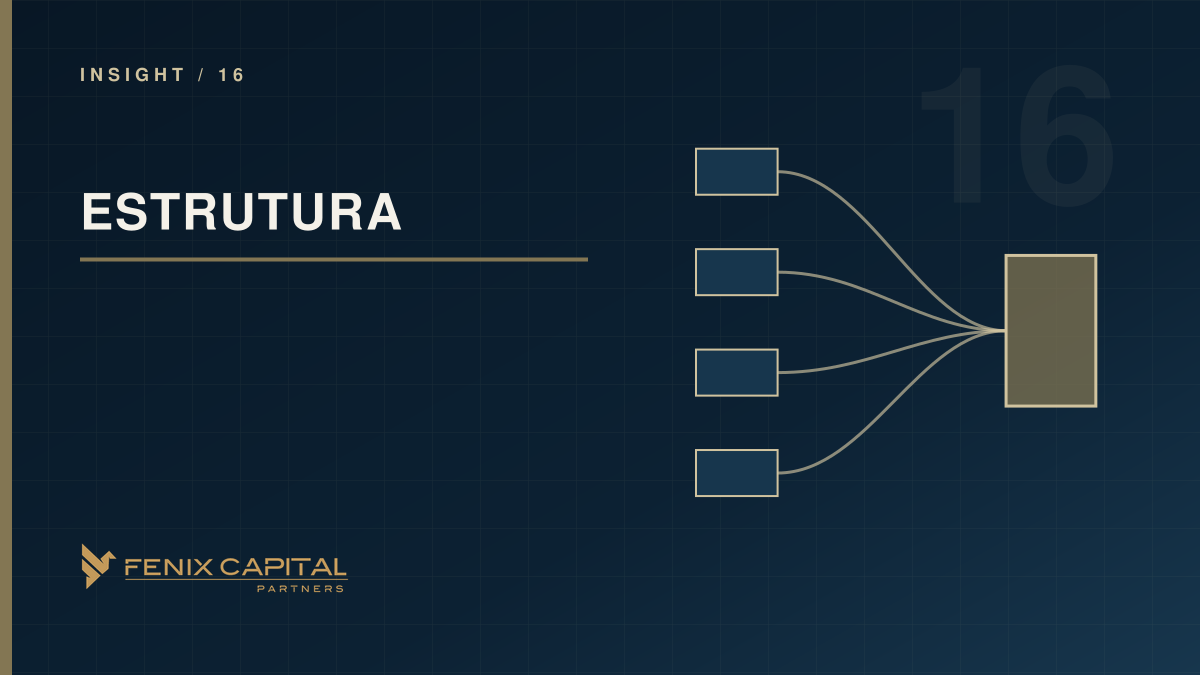
Few material projects should rely on only one source. A balanced structure may combine:
- equity to absorb the first layer of risk;
- medium- and long-term debt for assets and investments with predictable returns;
- short-term facilities for temporary working-capital requirements;
- incentives to reduce the eligible cost of the project;
- quasi-equity or subordinated debt to bridge the space between equity and senior lending.
Consider a EUR 5 million industrial investment. The company may fund part with its own resources, use debt for equipment, lease specific assets and apply for incentives on eligible expenditure. If the project requires a stronger balance sheet, it may also consider equity or quasi-equity.
The value of each instrument depends on the timing of payments and receipts. An approved incentive paid only after expenditure does not remove the need for liquidity during implementation.
Cost should be assessed comprehensively
Comparing interest rates alone often produces incomplete decisions. Total cost includes fees, security, insurance, reporting obligations, dilution, contractual restrictions and the management time required to structure and monitor each solution.
There is also an opportunity cost. Using all debt capacity on one project may prevent the company from financing a future acquisition. Transferring too much equity at an early stage may make a later capital raise more difficult.
A sound structure preserves alternatives.
The downside case matters as much as the base case
Growth plans are usually built around ambitious commercial objectives. The financial structure should also be tested with lower sales, reduced margins, additional investment and delays in receiving public support.
If a small variation makes debt service impossible, the structure is too dependent on the base case. If the project works only with a very high valuation in a future funding round, that risk should also be acknowledged.
Financing should enable strategy without turning every operational deviation into a financial emergency.
Structure first, negotiate second
When a company approaches funders without a clear model, it tends to compare proposals that are not truly comparable. One institution may offer a longer maturity, another may require less security and an investor may accept greater risk in exchange for ownership.
Preparing the investment plan, projections, scenarios, debt capacity and capital structure in advance allows the company to present a coherent requirement and negotiate several sources in parallel.
At Fenix Capital Partners, we begin with the business decision: what the company wants to achieve, what risk it can absorb and what flexibility it needs to preserve. Only then do we compare debt, equity, incentives and hybrid instruments.
The objective is not always to choose the cheapest source. It is to build a structure that funds growth and remains sustainable when the future does not unfold exactly as planned.